

· AFX Research
Special Assessment Districts and Your Title Search
A CDD, MUD or improvement district can add thousands a year to a property and keep collecting for decades. Part of it is recorded against the land and part of it lives with the tax collector, which is why buyers find it late.
Table of Contents
The roads, water lines and drainage in a newer subdivision were paid for before the first house sold, and somebody borrowed the money to do it. That borrowing is usually a special assessment district, the bonds are repaid by the lots themselves, and the obligation runs with the land rather than with the developer who created it. Twenty years later it is still on the tax bill, and the buyer who did not ask about it is the one paying.
What these districts are called
There is no national name for them, which is half the problem. Community development district, municipal utility district, special improvement district, public improvement district, special assessment district, Mello-Roos in California. They are creatures of state statute and the mechanics differ, but the shape is consistent — a defined boundary, infrastructure financed up front, and the cost recovered from the parcels inside it over twenty or thirty years.
What the land record holds
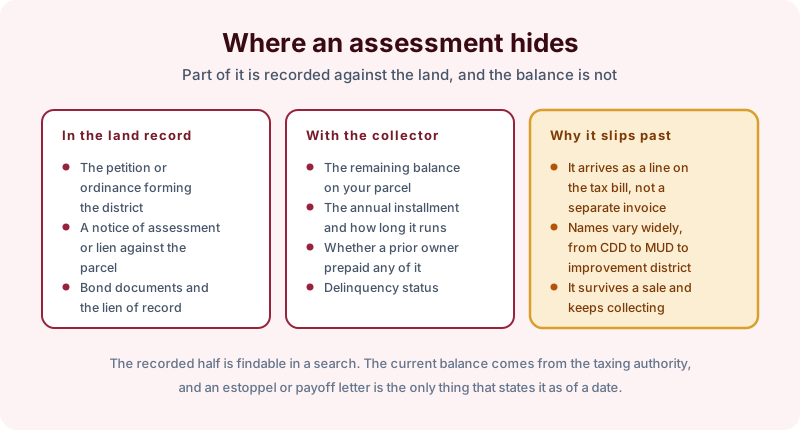
A search will find the recorded side of it. The ordinance, resolution or petition that formed the district. A notice of assessment or a notice of lien filed against the parcels. The bond and lien documents, where the state requires them recorded. Occasionally a declaration or disclosure recorded against the subdivision.
Those establish that the district exists, roughly what it covers, and that your parcel is inside it. They are ordinary recorded instruments and they behave like any other encumbrance found of record.
What it does not hold
The number you actually want. The remaining balance allocated to your parcel, the annual installment, how many years are left, whether a previous owner prepaid part of it, and whether anything is delinquent all live with the taxing authority rather than the recorder. Getting that requires an estoppel or payoff letter from the district or the collector, stated as of a date.
Why buyers miss it
Because it arrives as a line item on the property tax bill rather than as a separate bill, and most people read a tax bill as one number. It is also easy to mistake for an ordinary property tax, which is the one recurring charge everyone already expects. And unlike an HOA due, nobody sends a welcome packet explaining it.
The lien position is the part that catches lenders. In many states an assessment lien has priority ahead of a mortgage recorded later, which puts it in the same awkward category as an HOA super lien. Whether that is true in a given state is a legal question, but it is the reason lenders ask.
What to order
A current owner search will surface the recorded formation and lien documents where they exist. Ask for the recorded instruments themselves rather than a summary, then take the parcel number to the district or the collector for the balance. Two sources, because no single one has all of it.
The bottom line
If the neighborhood was built after about 1980 and the streets look privately financed, assume there may be a district and check before you are committed. The search gives you the encumbrance of record; the payoff letter gives you the number. Order online, or ask us what a search on that address would cover.