

· AFX Research
Title Search After a Natural Disaster
Storms damage buildings and leave paperwork on the land record. Contractor liens from the rebuild, conditions attached to disaster aid, and buyout restrictions that bar rebuilding, all found years later at the next sale.
Table of Contents
A house is repaired, the insurance is settled, and life moves on. What nobody checks in the middle of that is the land record, and the land record has been busy. A disaster does not just damage a building. It generates recorded instruments, and those outlast the repairs by decades.
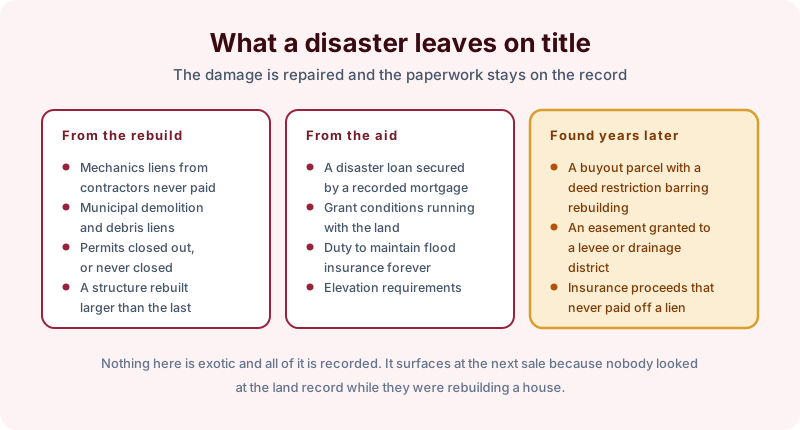
What the rebuild leaves behind
Emergency repair work gets done fast, by whoever is available, with paperwork that frequently comes second. That produces the single most common finding here, which is a mechanics lien from a contractor or supplier who was never paid because the insurance money ran out or went to somebody else.
Alongside it sit municipal charges. Debris removal, emergency demolition and board up work performed by the city are commonly recoverable as a lien on the parcel, which is the same mechanism behind code enforcement liens. And permits opened during a rush are the ones most likely never to have been closed.
What the aid leaves behind
Disaster assistance comes with conditions and some of them are recorded. A disaster loan is typically secured by a mortgage on the property. Grant programs frequently impose obligations that run with the land, most commonly a duty to carry flood insurance permanently, which binds every future owner regardless of what they were told at closing.
Elevation requirements work the same way. A house rebuilt with assistance may be subject to a recorded condition about how it can be replaced if it is damaged again.
The ones found years later
Two findings surprise people most.
- A buyout parcel. Where a government program bought flooded property and demolished the house, the land is usually conveyed or retained with a deed restriction barring any future rebuilding, permanently. It looks like a cheap vacant lot and it cannot be built on.
- A levee or drainage easement granted during recovery, giving a district the right to flood, access or maintain part of the property.
Add insurance proceeds that were paid to an owner and never applied to the mortgage, leaving a lien that everyone assumed was gone, and you have the usual set.
Boundaries can move too. Where a storm changed a shoreline or a river channel, the recorded description may no longer describe what is actually there, and a search reports the description rather than the ground. That is a survey question sitting on top of a title question.
What to order
Ask for a search covering the years around the event rather than just the recent chain, because the instruments cluster there. Name any contractors you know worked on the property. If the parcel is vacant in an area that flooded, ask specifically whether a buyout restriction is recorded against it before you buy.
The bottom line
None of this is exotic and all of it is recorded. It surfaces at the next sale because nobody read the land record while they were busy rebuilding a house, which is entirely understandable and still expensive. Order online, or ask us what a search on that address would cover.