

· AFX Research
Title Search for a Church or Nonprofit Property
Charitable property is usually given rather than bought, and the gift came with conditions. Use restrictions and reverters in the deed, the question of who can actually sign, and the tax consequences that follow a sale.
Table of Contents
Buying from a church, a lodge or a charity looks like an ordinary transaction and behaves like a different one. Most charitable property was given rather than purchased, and the person who gave it usually attached conditions. Those conditions are recorded, they run with the land, and they are the reason these deals fall apart late.
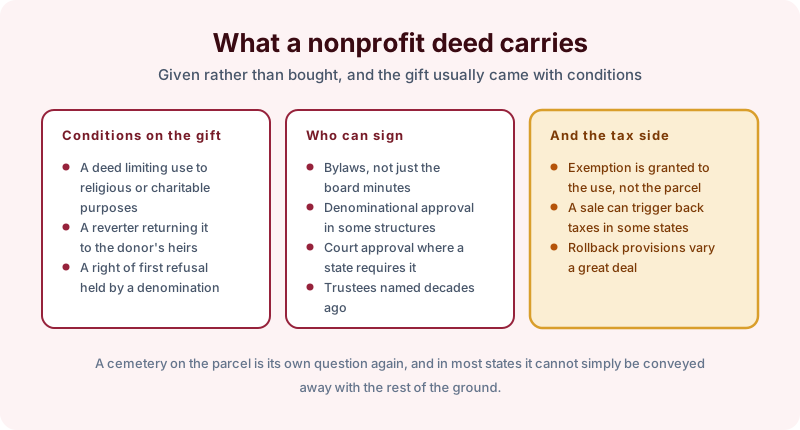
Conditions written into the gift
The deed into the organization is the document to read first, and read in full rather than summarized.
- A use restriction, limiting the property to religious, charitable or educational purposes. Sometimes phrased as a wish, sometimes as a binding condition, and the difference is a legal question.
- A possibility of reverter, returning the property to the donor or their heirs if the stated use ever stops. These are the dangerous ones, because the people entitled to enforce are descendants who may not know they have a claim.
- A right of first refusal held by a denomination or a parent organization, which has to be dealt with before any sale.
A search finds these where they were recorded, which is nearly always, since the whole point of the condition was to bind future owners.
Who can actually sign
Authority is the second problem and it is not answered by the land record at all.
Nonprofit corporations act through boards, and the bylaws say what the board may do. Some denominational structures require approval from a regional or national body before real property can be sold. A handful of states still require court approval for a charity to dispose of certain property. And trustees named in a deed from 1953 may all have died without anybody recording a successor.
None of that appears in the index. It comes from the organization’s own documents, and a buyer should ask for them early rather than at closing.
The tax side
Exemption attaches to the use rather than to the parcel. When the use stops, the exemption generally stops, and in some states a sale triggers rollback or recapture of previously exempted taxes. How far back that reaches varies considerably, which is worth establishing before the price is agreed rather than after.
Two things worth asking about
A cemetery or burial ground on the property is its own question. In most states it cannot simply be conveyed away with the rest of the land, and access rights for families survive a sale.
A parsonage or manse may have been held or financed differently from the main parcel, so confirm the search covers every parcel rather than the one with the building on it. That is the same scoping point as any multi-parcel search.
The bottom line
Read the deed into the organization before anything else, because the conditions in it decide whether a sale is possible at all. Then ask the organization for its bylaws and its approvals. Order online, or ask us what a search on that address would cover.