

· AFX Research
Title Search for a Home With a Tenant in Place
A sale does not end a lease, and residential leases are almost never recorded, so a clean title search tells you nothing about who is living there or how long they can stay. What to ask for before you waive anything.
Table of Contents
Buying a house with somebody already living in it is ordinary, whether you want the rental income or you want to move in yourself. What catches people is that the lease comes with the house, and the title search will not mention it. Residential leases are almost never recorded, so the index is silent on the one thing you most need to know.
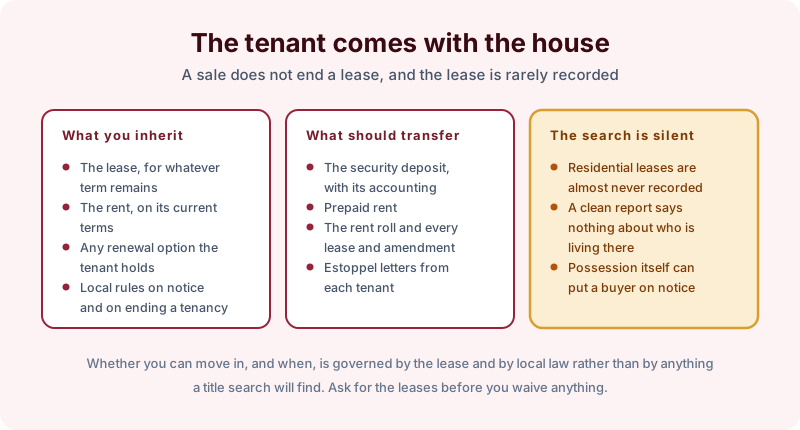
What you inherit
The lease, for whatever term is left, on its existing terms. Any renewal option the tenant holds. And whatever local law says about notice, rent increases and ending a tenancy, which in some cities is considerably more protective than the lease itself.
A sale is not a reason to end a tenancy in most places. If you are buying to occupy, the date you can actually move in is set by the lease and the local rules rather than by your closing date.
What should transfer at closing
Money and paperwork, and both get forgotten.
- The security deposit, with an accounting. In many states it stays the tenant’s money and the obligation to return it passes to you, whether or not the seller hands it over.
- Prepaid rent, prorated to the closing date.
- Every lease and amendment, not a summary, plus the rent roll.
- Estoppel letters from each tenant confirming the term, the rent, what was prepaid and whether any side agreement exists.
That last one is the cheapest item on the list and the most often skipped. Where an estoppel and the seller’s rent roll disagree, the disagreement is the finding.
Why the search is silent, and still worth running
The search does its normal job. Vesting, mortgages, liens and judgments, easements and restrictions. On a rental it is also worth asking about code enforcement liens and any registration requirement, because rental properties attract both.
What it cannot do is report occupancy. And there is a wrinkle worth knowing, which is that in many states a person in visible possession can put a buyer on notice of whatever rights they hold, recorded or not. In other words, the tenant being there is itself a form of notice, and not asking is not a defense.
Occasionally something does reach the record. A long lease may have a memorandum filed, and a tenant with an option to purchase sometimes records it to protect the option. Both are worth looking for specifically, because an unexercised purchase option held by the sitting tenant can defeat your sale outright.
What to order
Give us the address and the owner’s name, and say the property is tenanted. Ask the seller for the leases, the rent roll, the deposit accounting and the estoppels. If a short term rental is involved, the recorded covenants matter separately.
The bottom line
The title search tells you what you are buying. The leases tell you when you can use it. Get both before you waive an inspection contingency, because a clean report and a tenant with nine months left are perfectly compatible facts. Order online, or ask us what a search on that address would cover.